Salted and Dried Fish for African and Caribbean Shops: Stockfish, Makayabu, Saithe, Pollock and Bakkeljauw
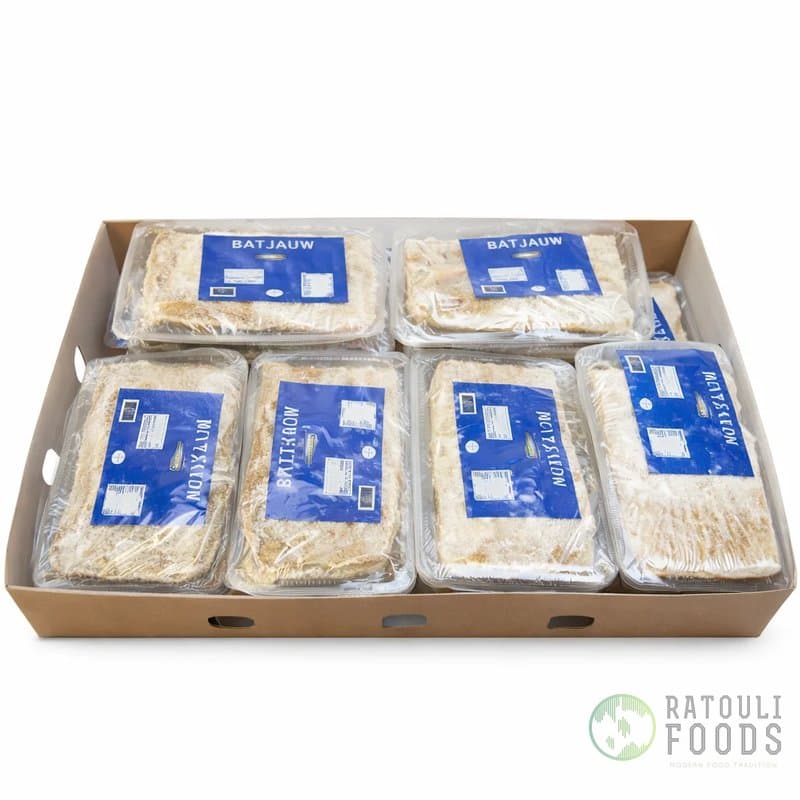
Stockfish, makayabu and Bakkeljauw are one trade family, sold under different community names. The salted product is nearly always salted saithe or pollock. The dried product is air-dried whole fish, mostly cod-family. We are an EU-approved processor (NL208262EG, HACCP) and we ship the full range DAP to your door across the EU and UK, from 400g consumer packs up to 9 to 10kg cartons and pallets. So a shop serving Nigerian, Ghanaian, Congolese, Surinamese, Antillean or Lusophone-African customers can buy the whole salt-fish set from one place.
One salted-fish range for African, Caribbean and Surinamese shops
Run an African, Caribbean or Surinamese shop in Europe and you already know the salt-fish corner does heavy lifting. It pulls customers from three or four communities into the same aisle. The names change from one shelf to the next. The fish underneath mostly does not.
Most salted fish in this trade is salted saithe or salted pollock. Two cold-water species, both take salt well, both hold up over a long supply chain. The dried product, what Nigerian and Ghanaian customers call stockfish, is a different process: air-dried whole fish, mostly cod-family, no salt at all. So you are really stocking two processes, salted and air-dried, across a short list of species, then selling them under whatever name each community grew up with.
We make and pack that whole range in Volendam and deliver it DAP. You order in your own language, we sort the freight and the paperwork, the goods land at your door. EU approval number NL208262EG and HACCP are on file, so a buyer who screens suppliers on compliance has what they need before the first pallet moves. The rest of this page is the working version: which fish goes to which community, what grades and formats to ask for, the pack sizes, and how it ships.
The fish by community: stockfish, makayabu, Bakkeljauw, bacalhau-adjacent
Here is the salt-fish set mapped to the customer who asks for it. Brand and trade names stay as the community uses them. The species column is the actual product underneath.
| Community name | Who buys it | Process | What it actually is |
|---|---|---|---|
| Stockfish | Nigerian, Ghanaian | Air-dried, no salt | Whole air-dried fish, mostly cod-family; whole fish and heads |
| Makayabu | Congolese and Central-African (strongest in Belgium and France, the Matonge trade) | Salted | Salted saithe or pollock; in shops the name also covers salted cod (makayabu ou morue) |
| Bakkeljauw | Surinamese, Antillean (NL primary, Belgium thinner) | Salted | Salted saithe or pollock |
| Bacalhau-adjacent salt fish | Lusophone-African: Cape Verdean, Angolan, Guinea-Bissau, Mozambican | Salted | Salted saithe or pollock, sitting next to the mainstream Portuguese salted cod (bacalhau) |
Two things to take from that table. Makayabu, Bakkeljauw and the bacalhau-adjacent salt fish are the same salted product wearing different labels, so one production line feeds three communities. The makayabu name carries a cod ambiguity on purpose: Belgian and French shops write it "makayabu ou morue" because morue means cod, and customers will take either the salted saithe or pollock or the salted cod under that name. Stockfish is the one that breaks the pattern. It is dried, not salted, so it lives on a dry shelf instead of the freezer, and it ships and stores differently.
Portugal flips the angle. Bacalhau is mainstream there, sold everywhere, so a Lusophone-African shop competes on the Cape Verdean and Angolan range next to it, not on the salt cod itself.
Saithe vs pollock and what each is used for
Saithe (Pollachius virens) and pollock (Pollachius pollachius, and in practice Alaska pollock too) are the two species behind most of the salted fish in this trade. Close cousins. Both white, both lean, both cure well with salt. For a shop the differences that matter are colour, price and what your regulars expect.
- Saithe runs a darker, greyer flesh raw and a fuller flavour once it is salted and soaked. It is the classic Bakkeljauw and makayabu fish. Surinamese and Congolese customers who grew up on it know the taste and the texture the moment they cook it.
- Pollock is paler and milder, and often a touch cheaper depending on the season. Good as a value line, and good for customers who want a lighter, cleaner salted fish.
Both sell as the same store SKUs: heel (whole), moten (steaks and pieces), filet, and split. Choosing between saithe and pollock comes down to your price point and what your area is used to. Not sure which one moves where you are? Order a small run of each and watch the freezer for a few weeks. We go deeper on the species split, soaking and yield in our salted saithe and pollock sourcing guide on this site, so this page stays on the stocking question.
Grades and salting: what stores should ask for
Salt fish is graded, and the grade is the difference between a clean repeat customer and an argument at the counter. When you order, ask about three things.
- Salting method and salt content. Heavy-salted (dry-salted) fish keeps longer and travels well. Lightly-salted needs a tighter cold chain. The reference here is Codex Stan 167 for salted and dried salted fish, which sets the salt-in-water-phase ranges that mark a proper cure. You will never quote a standard to a customer at the counter, but a supplier who works to it ships product that behaves the same carton after carton.
- Grade. Salt fish is sorted on appearance and damage. Top grade is clean, well-shaped and pale. Lower grades carry more breakage, yellowing or discolouration. The higher grade sells at the counter as eating-quality. The lower grade is perfectly fine for customers who soak it and cook it down into a stew or a sauce. Decide which one your shop sells, then order to it.
- Moisture and cure consistency. A consistent cure means a consistent soaking time for your customer, which means consistent results. That is what brings them back next week.
We grade and salt to a fixed spec and hold it the same across orders. Our salt-fish grades explainer (Codex Stan 167) on this site walks the grade ladder if you want the full picture before you pick a line.
Formats: heel, moten, filet, split, and pack sizes
The same fish sells in different shapes depending on the customer and the kitchen. Stock the format your community reaches for at the counter.
| Format | What it is | Who asks for it |
|---|---|---|
| Heel (whole) | Whole salted fish | Customers who cut and portion at home; best margin per kilo |
| Moten | Steaks and cut pieces, bone-in | Surinamese and Antillean cooking; quick to grab and weigh |
| Filet | Boneless salted fillet | Customers paying for convenience; the easy-sell SKU |
| Split | Split-cured whole fish, opened flat | Traditional salt-fish presentation; dries well and cures evenly |
| Stockfish (dried) | Whole air-dried fish and heads | Nigerian and Ghanaian cooks; dry shelf, not freezer |
Pack sizes run from the consumer shelf to the back of the shop:
| Pack | Use |
|---|---|
| 400g / 500g / 600g consumer packs | The standard Bakkeljauw retail packs that move off a Surinamese toko shelf |
| 1kg | Small retail and trial orders |
| 5kg carton | The horeca and busy-shop workhorse; the common Bakkeljauw catering size |
| 9 to 10kg carton | The makayabu trade size for Congolese and West-African shops |
| Pallet | Multi-carton restock for distributors and high-volume stores |
You do not have to start with a pallet. Mix formats and pack sizes on one order, see what sells, then scale the line that moves.
Cold chain and DAP delivery for stores and wholesalers
Salt fish and stockfish are not the same logistics job. Heavy-salted fish and air-dried stockfish are stable and travel well. Lightly-salted product wants a tighter chill. We pack and ship each to suit: frozen where it needs to be frozen, ambient or chilled where it does not, so it arrives in a state you can put straight on the shelf.
Delivery is DAP, delivered at place. We arrange the transport and the export and customs paperwork. You take the goods at your shop or warehouse and handle the local unloading. For an EU shop that means no border friction. For a UK shop after Brexit it means the customs side is settled at our end under the DAP terms, so you are not standing up an import operation just to buy a few cartons of stockfish. We deliver across the Netherlands, Belgium, Germany, France, Spain, Italy, Portugal and the United Kingdom.
Stockfish wholesale into Europe and the UK usually runs through directory listings, Europages or Alibaba, rather than a named, EU-approved maker. Realistic low-MOQ for dried stockfish sits around 500kg, with samples typically out the door in 5 to 10 days. We are the maker, not a listing. NL208262EG and HACCP on file, one invoice, one delivery.
How to order
Tell us four things and we can quote: which fish (stockfish, makayabu, Bakkeljauw, salted saithe or pollock), the format (heel, moten, filet, split), the pack size, and your delivery address. We come back with price, lead time and the DAP quote to your country. The full salt-fish range is on the products page.
Stocking a full shop and not only fish? Our sister brand Ratouli Foods runs the broader African grocery stock list: frozen offal (shaki, abodi, ponmo, cow feet) and the Surinaamse worst family, on the same EU approval and the same DAP delivery. Plenty of shops take their salt fish from us and the rest of the freezer from Ratouli Foods on one relationship. Get in touch and we will open a wholesale account and get a sample order moving.
Updated June 2026.
Talk volume and price
Book a 15-minute call or send your spec. You deal with the production planner direct, not a call centre.