Where bakkeljauw comes from: China origin, salting and the route into Europe
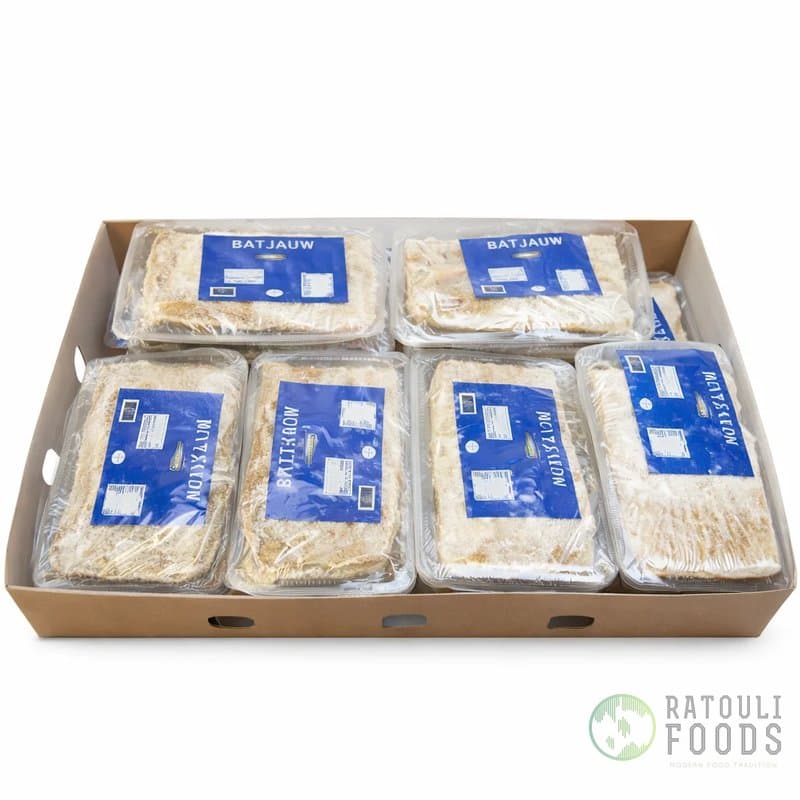
Much of the bakkeljauw sold in Europe is salted saithe or Alaska pollock fillet, migas and bits processed and packed in China, mainly Qingdao in Shandong province. Salting also happens in Northern Europe and Iceland. The fish is caught at sea, salted, shipped, often reprocessed near the buyer, then sold chilled.
The short, honest answer on origin
I have traded fish out of Volendam for more than 14 years, so let me give you the version the recipe blogs leave out. Bakkeljauw is salted white fish, traditionally dried as well. In the Surinamese-Dutch trade we call it klipvis or rotsvis. The name comes from the Portuguese bacalhau, through the Spanish bacalao, and it reached Suriname because heavy salting keeps the fish edible for up to a year on a long voyage.
Here is the part buyers actually care about. The fish sold as bakkeljauw is usually not classic cod. Most of the time it is saithe (koolvis, Pollachius virens, sold in the US as Atlantic pollock), or Alaska pollock, with some ling and tusk mixed in. Albert Heijn even labels its product "Lufo Bakkeljauw filet Alaska pollock". So when a spec sheet says "salted fish china origin" or "salted pollock origin", nobody is cutting a corner on you. That is the real modern supply chain. After the Grand Banks cod stocks collapsed, cheaper white species took over across the whole saltfish world.
One precision point, because getting it wrong costs money. Pollachius virens is the saithe that becomes bakkeljauw. Pollachius pollachius is a different fish, the pollack or lythe. On a contract they are not interchangeable. Know which one your supplier means.
Why so much of it is processed in China
China, specifically the Qingdao area in Shandong, is the dominant processing and export hub for salted pollock and cod fillet, migas and bits. That is the single biggest fact in the bakkeljauw supply chain, and most sellers in the diaspora market never say it out loud.
The reason is simple. Filleting, salting to a precise moisture target, sorting by size and grade, then packing into retail pouches and horeca boxes is all labor. The plants around Qingdao do that work at a scale and price Northern European packers cannot match on the cheaper formats. So whitefish caught in the North Atlantic or the North Pacific gets shipped to China, processed, salted, and sent back out as finished bakkeljauw. The cheap formats lean hardest on this route. Migas, the small shredded boneless skinless pieces cut from faces, wings, tails and thin loins, is heavily China-processed, because that is the format where labor cost sets the price.
Salting also still happens in Northern Europe and Iceland, mostly for the higher-grade split-and-salted whole fish and premium fillet. So the honest picture is two lanes, not one. A China lane for volume fillet, migas and bits. A Northern European lane for traditional salting and premium grades. A serious supplier can tell you which lane any given lot came down.
The route from sea to your shelf
Follow one batch of migas and the chain is clear. The whitefish is caught in the North Atlantic or North Pacific. It moves to a processing plant, very often in Shandong, where it is filleted, cut, salted and dried to a market moisture level. It is packed, containerized, and shipped to Europe. Near the buyer it gets reprocessed more often than not: re-graded, re-cut, repacked into the local format, sometimes re-salted lightly to hit a regional moisture spec.
That moisture target is not random. It is cut to the destination market.
| Market | Moisture target |
|---|---|
| Portugal | 48 to 50 percent |
| Netherlands and Spain | 51 percent |
| UK | 51 percent |
| US | 52 to 54 percent |
| Brazil | 54 percent |
Salt sits around 20 to 22 percent. The number that decides safety and storage is water-phase salt: WPS = %salt x 100 / (%salt + %moisture). At 17 percent WPS or higher the fish can sit ambient. Below that it needs to be chilled. In practice, the heavily salted bakkeljauw we trade still ships and stores chilled, not ambient. Do not let anyone tell you saltfish is automatically a shelf-stable ambient product. Check the WPS.
What to ask your supplier, specifically
If you want transparency, ask questions that have numbers in the answers. Vague questions get vague answers. Here is the list I would use as a buyer.
- Species and Latin name. Saithe (Pollachius virens), Alaska pollock, ling or tusk? Get the Latin name on the spec so nobody slips Pollachius pollachius into a Pollachius virens order.
- Processing country and plant. Was it processed in China, around Qingdao, or salted in Northern Europe or Iceland? Ask for the approved establishment.
- Moisture and salt percent, and WPS. These set the format, the price and the storage condition. Get all three.
- Format and bone status. Fillet near-boneless, split-and-salted on the bone (heel or moten), or migas? In Codex STAN 167 terms, split keeps the whole backbone, fillet removes the fins and main bones.
- Storage condition. Chilled or ambient, and the temperature on the label. Most real bakkeljauw is chilled.
- EU compliance paperwork. Approved-establishment sourcing, the designated border control post, the GGB/CHED health document and NVWA registration. If a supplier cannot produce these, the goods should not be crossing the EU border.
Pack norms are predictable, so use them to read a quote. Retail runs 350 to 600 g pouches. Horeca runs 5 kg bags and 2x5 kg (10 kg) boxes. Container scale is 9 or 25 kg cartons, full 20 or 40 foot loads, with an MOQ around 10 metric tons.
What bakkeljauw is not, and why it matters on the invoice
Two mix-ups cost buyers real money, so keep these straight.
Bakkeljauw is not stockfish. Stockfish (stokvis, Stockfisch, stoccafisso, okporoko, panla) is unsalted air-dried fish. Different product, different price, different cooking method. The loose Surinamese-Dutch habit of calling bakkeljauw "Surinaamse stokvis" is technically wrong, because bakkeljauw is salted klipvis, not unsalted stokvis. If your packing list says stokvis but you ordered salted fish, stop and check.
Bakkeljauw is also not makayabu. Makayabu is the same salted saithe or pollock, split with the backbone in, usually unwashed so it carries heavy surface salt. It is a Central African staple, mainly Congolese, and we sell it as its own SKU. Same family of salted whitefish, different cut, different salt level, different buyer.
One more thing buyers do not always know. Bakkeljauw has to be desalted before eating, or it is inedibly salty. The kitchen step is uitkoken: boil 15 to 20 minutes in plenty of water, drain, taste, repeat until the salt is right, or soak about 24 hours changing the water every 3 to 4 hours. Then rinse cold, squeeze dry, flake, and pick out the bones. That is why moisture and salt percent are not abstract numbers. They decide how your customer's broodje bakkeljauw or heri heri turns out. Get the origin and the specs right, and the rest of the chain is honest work.
Talk volume and price
Book a 15-minute call or send your spec. You deal with the production planner direct, not a call centre.